
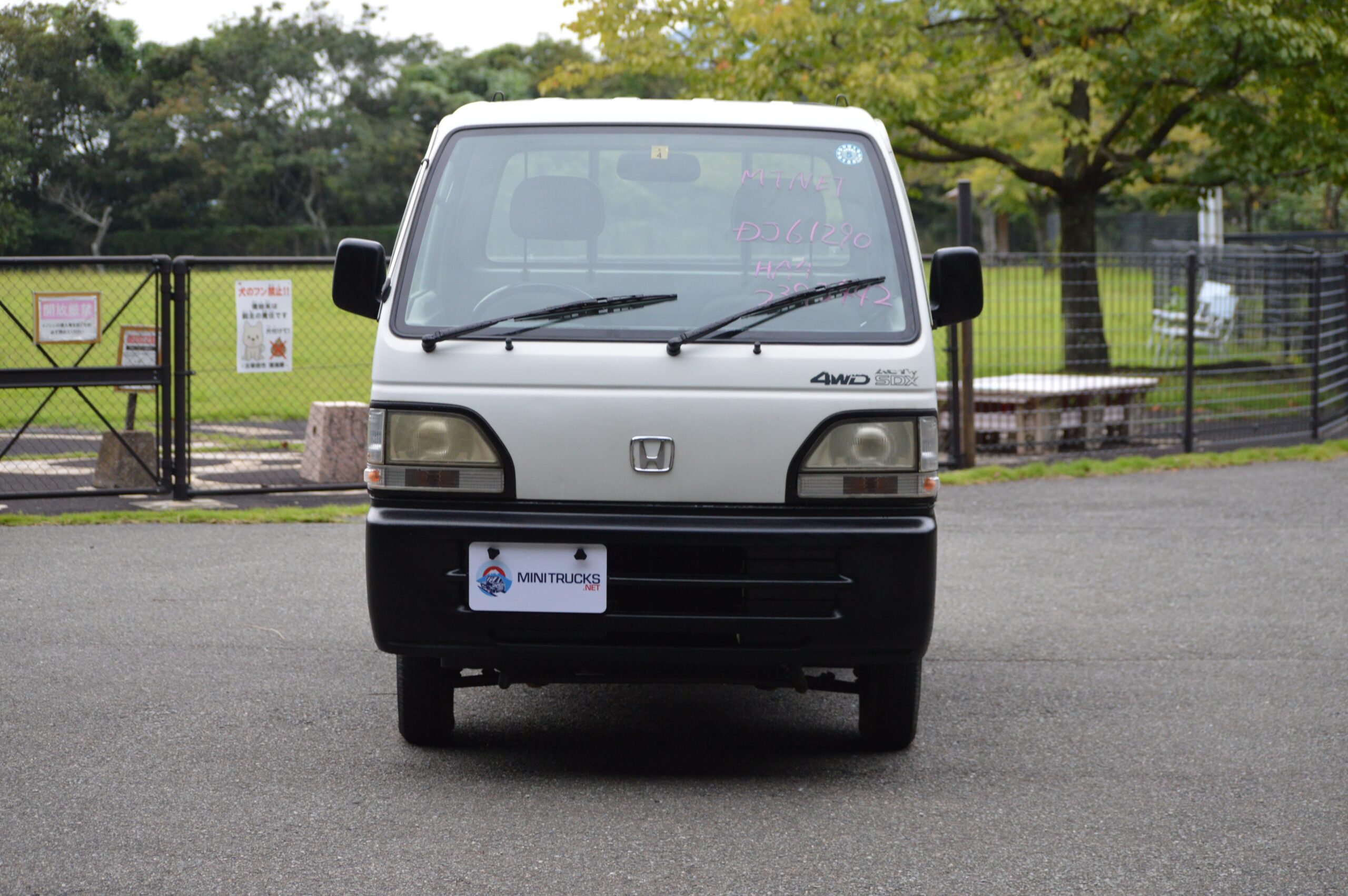
Why a Physical Inspection Still Matters
A Japanese auction sheet tells you a lot, but it’s a snapshot taken before shipping, in a different climate, on different roads. Once a truck lands in the US, a quick hands-on check confirms nothing shifted in transit and flags anything specific to how you plan to use it. Whether you’re buying from JPM or anyone else, run through this list before you sign.
Exterior & Undercarriage
| Rust | Surface rust on wheel wells is common and cosmetic. Structural rust on the frame, rockers, or bed floor is the dealbreaker — check underneath, not just the paint. |
| Panel gaps & paint | Uneven gaps or mismatched paint can indicate prior accident repair — cross-check against the auction sheet’s R/RA notes. |
| Tires & wheels | Check tread depth and manufacture date (DOT code) — kei truck tire sizes aren’t stocked everywhere, so old tires are worth budgeting to replace. |
| Lights & glass | Confirm all lighting works and the windshield has no chips that will spread. |
Engine, Drivetrain & Fluids
Start the engine cold if possible — it should idle smoothly within seconds, not hesitate or smoke. Check oil color and level, look under the truck for fresh leaks, and if it’s 4WD, confirm the selector engages the front axle cleanly. On a manual, the clutch should engage predictably with no slipping or grinding; on automatics, shifts should be smooth through the full range.
Interior & Documentation
Check that the HVAC blows both hot and cold, the horn works, and there’s no musty odor suggesting past water intrusion. On paperwork, confirm the title status, the Japanese export certificate, and (if 4WD) that the chassis plate matches the listing. If anything doesn’t match, ask before you buy — not after.
A Note on DIY vs. Professional Inspection
Every kei truck JPM sells goes through our own pre-delivery inspection process before it’s handed off, covering all of the above plus brakes, suspension, and electrical systems in detail. If you’re buying privately or from another importer, it’s worth asking whether a documented inspection report is available — and if not, budgeting an hour with this checklist before you commit.
Frequently Asked Questions
What’s the single most important thing to check?
Structural rust on the frame and bed floor. It’s the one issue that’s expensive to fix and genuinely affects safety — everything else on this list is either cosmetic or a cheap repair.
Should I get a third-party mechanic to inspect it?
If you’re not comfortable doing the checklist yourself, yes — though not every shop has worked on a kei truck before, so ask around for one familiar with Japanese imports.
Does JPM provide an inspection report with every truck?
Yes, every vehicle we sell goes through a pre-delivery inspection and comes with a 30-day mechanical warranty. Contact us if you’d like details on a specific truck’s inspection before you buy.
What if I find an issue after I already bought the truck?
If you bought through JPM, reach out within your 30-day mechanical warranty window and we’ll help sort it out.
Browse trucks that have already passed our inspection process in current inventory, or read our maintenance schedule guide for what to do once it’s yours.